
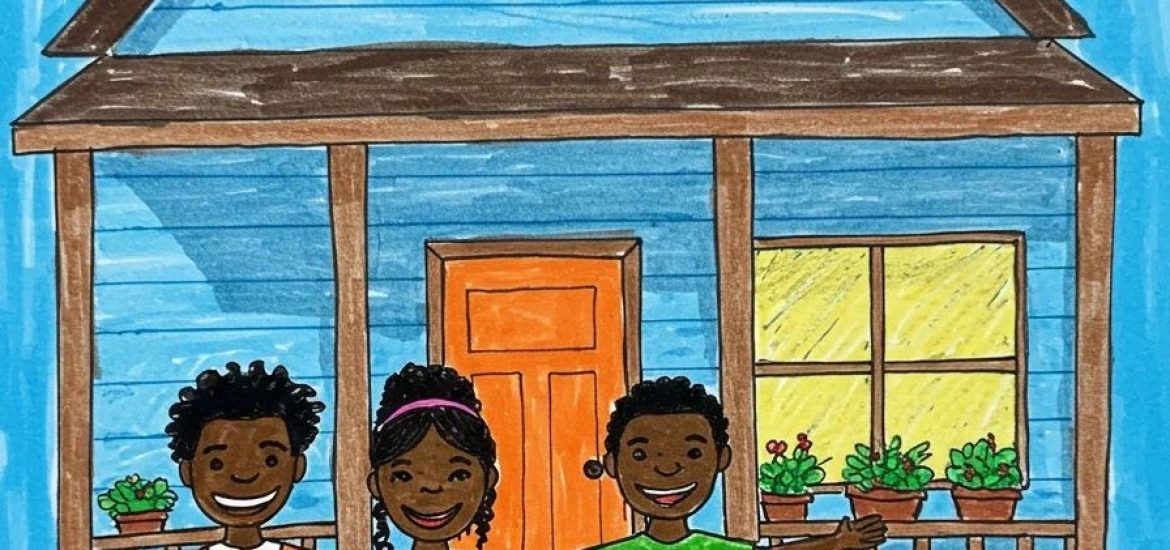
Written by Opeoluwa Ogunsola. (Image from craiyon.com)
My name is Gloria and I am 8 years old. Six months ago, the rain went away. So I went on an adventure with the sun to know why. After I returned from the adventure, I created the Tell a Friend About the Climate Group. Together with my friends, we practiced everything I learned during the adventure, and the rain came back again.
After these, Eco Diversified International, a climate advocacy organisation, came to my school and trained me better about the climate. They made me a climate ambassador, too. Today, I am going to share with you some of what they taught me.
Children like you and me must understand that climate change causes environmental disasters. And as children, we must participate in environmental protection by tackling environmental damage even before they occurs. We must not wait until the environmental disasters that climate change causes destroy our communities before we respond to them. The practice of this is referred to as Disaster Risk Reduction. (DRR)
My grandmother always tells me ‘ọgun ń bọ̀, ọgun ń bọ̀, kò kí ń pa arọ tí ó bá gbọ́n. A war that is foretold does not kill a wise cripple.” (Heed warnings, and prepare adequately for difficulties beforehand.)
The key slogan for DRR is ALERT
That is, to reduce the risk of environmental disasters, we must stay ALERT to stay secure.
A is for attention. Pay attention to the news on television and the radio. Read the newspapers to be informed about the disasters that might occur. So you can stay safe.
L is for learning. Learn about the dangers that are prevalent in your community. For example, if your community is affected by storms, learn about storms and how to stay safe. Like not playing outside during the rain, turning off your electronics, and putting your emergency items where you can reach them easily. When the sky starts to get dark or there is a thunderstorm, don’t stand under a tree.
E is for environmental protection. You must keep the environment safe by caring for it and protecting it. Plant trees, do not litter the environment with waste. Drop used plastics in the recycling bins.
R is for readiness. You must always be ready to tackle the damage. This is so that the damage will not destroy our communities. Plan how to respond during any emergency. Don’t be caught unawares.
T is for times and seasons. Understand the times and seasons and act accordingly. During the dry season, conserve water; do not waste it. During the rainy season, watch out that the drainage and rivers are not blocked by waste.
How adults and the government must contribute to DRR
- Build strong homes that can withstand storms and disasters
- Plant climate-resistant trees and practice smart farming
- Plant crops that are resistant to drought
- Build safe shelters and hold evacuation drills.
When we all cooperate together to reduce the risk of disasters, our world will be a safer place for everyone, most especially children.
To read all about Gloria’s adventure with the sun, check out page 24 of the Anthology of Children’s African Literature by Brittle Paper