
A short story educating children about the environmental contributions of indigenous peoples. Written by Opeoluwa Ogunsola.
On Saturday, after Tunde and Bade left the clean-up, they went to Papa’s shed. They liked to visit with him on Saturdays. Tunde particularly enjoyed listening to Papa’s comments about the ways of life long ago. Papa liked to reminisce about the history and practices of the water community.
Tunde and Bade met him cleaning out a boat in his shack. He just repaired a net, too. Papa could turn any spoiled boat or net from ruins to perfection.
“Good afternoon Bàbá àgbà,” They greeted. He liked them to address him as Bàbá àgbà rather than Papa.
“My sons welcome. You both are a little late today.”
“We joined the beach clean up, Bade said, assisting Papa with carrying the huge, now rusted tin of Nutrend Baby Food that he always had with him. The old tin served as his toolbox and contained everything he needed for his work, from nails to his hammers.
“Yes, I saw people on the beach cleaning this morning. It is responsible of you boys to join in caring for the ocean.”
“Whose is this Bàbá àgbà?” said Tunde with a slight gesture at the boat the old man was cleaning out.
“A young man brought this boat for repairs. He initially wanted me to build him a new one, but I told him to let me take a look at this old one.”
“But Bàbá àgbà, you did not need to convince him to repair it if he wanted a new one.”
“You see, my son, sometimes, it’s better to repair using our local knowledge than to cut down trees to build new ones each time a boat or canoe gets spoiled. You know, we have to preserve the forests. Our local tools repair boats and canoes very well. But these days, people just want to cut down the forests anyhow. My sons, each time a tree is cut, one must plant it back.”
“Baba àgbà, how did our people culturally preserve the fish in the ocean and the water environment?” Tunde asked.
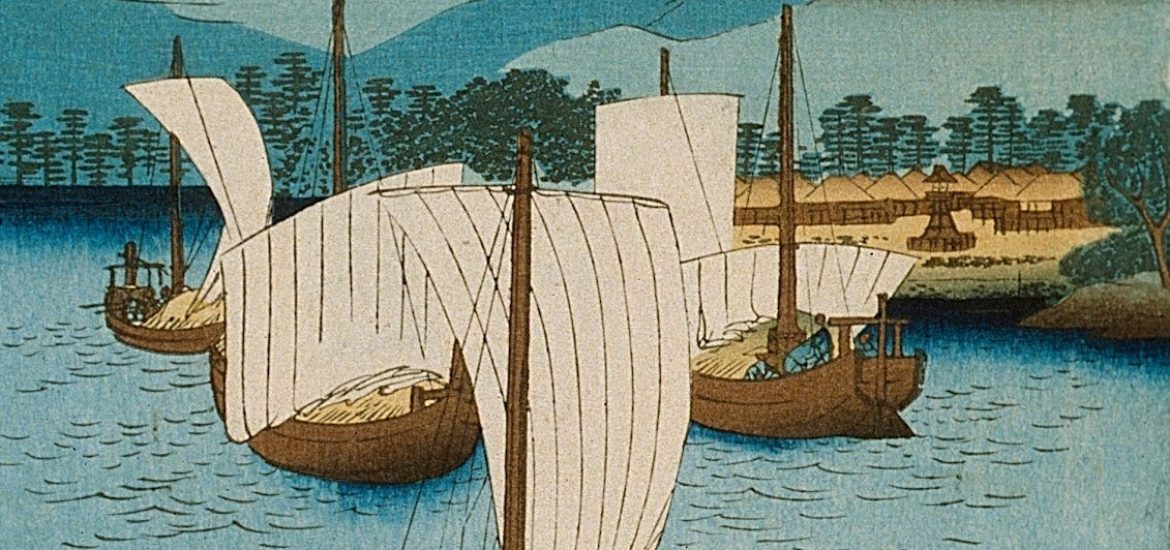
“Our people have made boats for years, special types of boats suitable for our type of environment. We design it so as not to disturb the aquatic animals beneath. They are also good for reducing damage to igbó odàn (mangroves) that some people erroneously cut nowadays. He said, shaking his head sadly.
“Also, whenever we fish, we don’t fish the young. Rather, we build structures that act as a nursery for small fish and preserve them until it is time for harvest.”
“The acadja?”
“Yes, it is taboo to see young fish and continue to fish for them. So we have seasons when we must not fish in certain areas in order to let nature replenish them. Our people have monitored the weather for centuries. We are skilled so that when a particular season is coming, we always know whether or not to fish. We know the species of fish that are available during a season and the limits so as not to overfish. Knowledge about the seasons helps us to curb flooding, one of the reasons why we customarily preserve the igbó odàn (mangroves). You see, it’s our responsibility, given to us by nature. We must protect the environment and not ravage it. We must not deplete the ocean, but rather we must give it a chance to replenish itself.
“Bàbá àgbà, you know so much about protecting the environment through our practices.” Tunde observed.
“Yes, we have conserved the ocean for centuries with our traditional knowledge and customs, even before modern science. And we make sure to spread it by word of mouth from generation to generation, like I am doing with you both. We also reflect the lessons about conservation through proverbs.”
“Tell us Bàbá àgbà” said Bade.
“Our people will sometimes say “À ń gba ọmọ ẹja lọ́wọ́ ikú, ó ní ekòló títóbi ẹnu ìwọ̀n yẹn gan-an lòun fẹ́ jẹ.” (We are trying to save the young fish from death, but it is saying that it would like to eat the bait, the big worm at the end of the fishing hook.)
This shows how we prefer to conserve the fishlings and don’t harvest them until they mature.”
“Thank you, Bàbá àgbà, we have learnt much more about the ways of our people in protecting the ocean and the environment.” Tunde and Bade said.
“Thank you, too, my sons. Now, give me a hand, let’s get this boat back to shape.” Bàbá àgbà said, drawing a hammer from the old tin.